




OBJECTIVE | To establish the guidelines that promote a diverse, respectful, inclusive culture with equal opportunities, in alignment with the organization’s corporate values. |
SCOPE | Applies to all people within the organization, across the different areas in which our services are provided. It includes the identification of principles, responsible parties, communication and disclosure mechanisms, as well as the actions to be taken in case of non-compliance with this policy. Regarding stakeholders, the diversity and inclusion policy will take into account all groups defined by the Colombian State as priority populations. |
ASSOCIATED DOCUMENTS | N/A |
TERMS Y DEFINITIONS
Disability: Disability is a concept that relates to the sensory, physical, cognitive, intellectual, psychosocial, and/or multiple differences that a person may have. This is linked to physical, attitudinal, and communication barriers that limit their participation and access to different areas or contexts (work, social, economic, among others).
Discrimination: These are actions or omissions that exclude, violate, or affect a person in any way (physical, psychological, structural, among other forms of violence) because of their sexual orientation, gender identity, ethnic background, age, disability, place of origin, social class, or any other marker of difference.
Diversity: Refers to the multiple ways of being that characterize the groups and societies that make up humanity. It is expressed in the plurality of identity, social, cultural, ethnic, religious, and other particularities that define each person and provide added value to society.
Gender Equity: Seeks to provide the same conditions to all human beings, without any discrimination based on gender, recognizing their trajectories, experiences, and contributions.
Gender: A category that organizes and hierarchizes social practices by assigning roles in different areas. It serves as a mechanism that marks differences between people, based on sex as a factor that leads to practices of being and expected behavior mainly between men and women.
Inclusion: Actions aimed at improving and facilitating access to services and the effective enjoyment of rights through free expression, especially for people who have been historically excluded. It is expressed through the promotion of positive changes, both collectively and individually.
Intersectionality: An approach that identifies how the simultaneous crossing of different systems of discrimination and oppression occurs in individuals, demonstrating that forms and experiences of discrimination (based on gender, ethnic background, disability, religion, among others) cannot be explained in isolation.
Inclusive Language: Refers to the use of language in a way that recognizes and integrates diverse population groups, avoiding invisibility and bias toward people with disabilities, ethnic groups, migrants, and people with diverse sexual orientations and gender identities.
Inclusive Communication: Refers to language that reflects recognition of gender and social diversity and seeks to balance inequalities. Inclusive language contributes to building a society that recognizes and integrates diversity, equality, and gender equity.
Sexual Orientation: Refers to the emotional and sexual attraction or desire a person feels toward another person, whether of the same sex or a different sex.
Ethnic Belonging: A concept used to identify people as members of one of the legally recognized ethnic groups. Ethnic belonging reflects the cultural and socio-organizational differences of certain communities; ethnicity encompasses the different cultural expressions of a population, including religious, political, organizational, and spiritual practices, as well as their worldviews and language.
Priority Population: Refers to communities that are in a vulnerable condition and are part of Colombian State public policies, requiring special attention regarding access to employment, treatment, culture, and equal opportunities.
ROLES Y RESPONSABILIDADES | |
ROLE | RESPONSIBILITY |
Human Talent Manager | Present proposals to senior management that support the implementation of the DEI policy, as well as strategies to promote organizational cultural transformation. Report periodically to General Management. |
Talent Attraction and Recruitment Leader | Implement strategies to ensure compliance with the DEI policy and its specific objectives. Actively participate, on behalf of the organization, in regional DEI events. |
DEI Committee | Collaboratively develop actions that contribute to the growth, improvement, and adaptation of the company’s diversity and inclusion policy. |
Training and Well-being Leader | Implement the training plan to promote and raise awareness of DEI within the company. Act as substitute for the Talent Attraction and Recruitment Leader in their absence. |
Manager of Control, Improvement, and Innovation | Monitor, oversee, and audit compliance with the DEI Policy, the training plan, and other strategies designed for this purpose. |
REGULATORY FRAMEWORK
In Colombia, there are several regulations aimed at protecting and promoting the principles of diversity, inclusion, and equity. The main applicable regulations are:
Political Constitution of Colombia (1991):
The Constitution guarantees fundamental rights to equality and non-discrimination under Article 13, and establishes that the State must promote conditions for equality to be real and effective, providing special protection to groups that have traditionally been discriminated against.
Law 1010 of 2006 (Law on Workplace Harassment):
Although not exclusively focused on diversity, inclusion, and equity, this law protects individuals from workplace harassment, including discrimination and mistreatment based on gender, race, sexual orientation, religion, among others.
Law 1482 of 2011:
Also known as the Anti-Discrimination Law, it amends the Colombian Criminal Code to impose criminal sanctions on discriminatory and harassment acts. This law establishes new criminal offenses to protect the rights of individuals, groups, communities, or peoples who are affected by discrimination or racism.
Substantive Labor Code:
It includes general provisions that protect equal rights for workers and prohibits discrimination of any kind in the workplace.
PRINCIPLES
The Inclusion and Diversity Policy is based on the provisions established in the Political Constitution of Colombia, is aligned with the company’s ethical framework, and has been developed based on the feelings, opinions, and experiences of the people who are part of the organization.
The principles that guide our organizational conduct are defined below:
Equal conditions, fair treatment, and respect for diversity
The organization embraces freedom of expression and equal conditions, promoting dignified and equal treatment regardless of sexual orientation, disability, socioeconomic status, religion, gender, or any other condition that may lead to discrimination against individuals.
It fosters an inclusive, diverse, and respectful work environment, free from harassment, discrimination, and/or abuse.
Inclusive organization and meritocracy
BPM Consulting SAS actively supports the reduction of employment access gaps and therefore promotes the hiring of individuals who have the skills and competencies required to perform a role and who meet the requirements established by our clients.
As part of its inclusion strategy, the organization will progressively define the population groups it will address over time, based on its infrastructure, financial, and operational capabilities.
Likewise, it ensures transparent selection, career growth, and professional development processes, in which competencies, merit, and professional performance prevail. It encourages access to new opportunities by prioritizing internal talent, regardless of social, economic, or identity conditions.
Environments Free from Discrimination
BPM Consulting SAS implements various actions to raise awareness among its work teams about non-discrimination and the inclusion of all individuals in an environment of equal opportunities. To achieve this, the organization works on:
- Promoting respectful, inclusive, and non-discriminatory language, taking into account ethnic differences and gender identities.
- Gradually reducing behaviors and forms of communication that may affect individuals and/or the work environment.
- Proposing projects, activities, conferences, and talks that contribute to transforming cultural patterns related to racism, sexism, discrimination, and, in general, all social perceptions regarding “others” and diversity.
- Providing training within the company, delivered by experts and specialized entities, on gender-based violence and on how to progressively eliminate sexism and racism within the workplace.
- Creating awareness spaces to reflect on how we perceive difference and other ways of thinking, acting, and expressing ideas.
- Establishing communication channels that allow individuals to report to the organization any incidents that may violate their rights and/or agreed working conditions.
Work–Life Balance
For the organization, it is essential to have people who feel well and are satisfied in their roles. In this regard, it also recognizes that, in the pursuit of equity, there must be a balance across the different environments in which a person develops.
Accordingly, it understands the needs of its work teams and considers the possibility of adopting work modalities different from on-site arrangements, in cases where the client permits it.
Likewise, it establishes and promotes guidelines to ensure that personal, family, and rest time are respected.
SPECIFIC OBJECTIVES
For the implementation of this policy, the organization has defined four pillars, which, under the direction of the Human Talent and Culture Management area, are carried out with the support of the departments deemed relevant by said management area.
Ongoing awareness
The organization focuses its efforts on designing and implementing awareness initiatives that foster understanding of key concepts such as diversity, equity, and inclusion, in order to build awareness and promote a culture of respect and acceptance in the workplace.
Inclusive and equitable hiring
Through recruitment and selection processes, the organization promotes inclusive and equitable hiring practices. This involves developing guidelines that prevent bias in talent selection, encourage diversity at all levels, and ensure equal opportunities for all individuals.
Creation of listening and participation spaces
The company develops communication channels and safe spaces where individuals can express their opinions and experiences related to diversity, inclusion, and equity. These spaces help identify areas for improvement within the organization and support the design of strategies that respond to the real needs of teams.
Measurement and evaluation of the impact of diversity on organizational culture
Assessments are carried out to identify the impact of diversity and inclusion initiatives on the work environment. This includes climate surveys, feedback analysis, and periodic reports that allow the organization to identify progress, challenges, and areas of opportunity.
DIVERSITY, INCLUSION, AND EQUITY COMMITTEE
BPM Consulting SAS, recognizing the importance of diversity and inclusion, establishes an internal body that represents its commitment: the Diversity, Inclusion, and Equity Committee.
This Committee is part of the Diversity and Inclusion strategy and aims to collaboratively develop actions that contribute to the growth, improvement, and adaptation of the company’s Inclusion and Diversity Policy. To this end, it considers and addresses cultural issues and needs that may arise within the organization.
COMPLAINT MANAGEMENT
The organization provides a PQRSF (Petitions, Complaints, Claims, Suggestions, and Feedback) channel that can be used by any individual who plays a role within the organization. This channel is intended for the management of situations in which individuals feel that their rights have been violated or that they have been mistreated by their superiors or by colleagues of equal or lower hierarchical level on a recurring basis. It is aligned with the guidelines established in this policy.
Website: https://www.bpmconsulting.com.co/
Image 1 – Tipo de solicitud
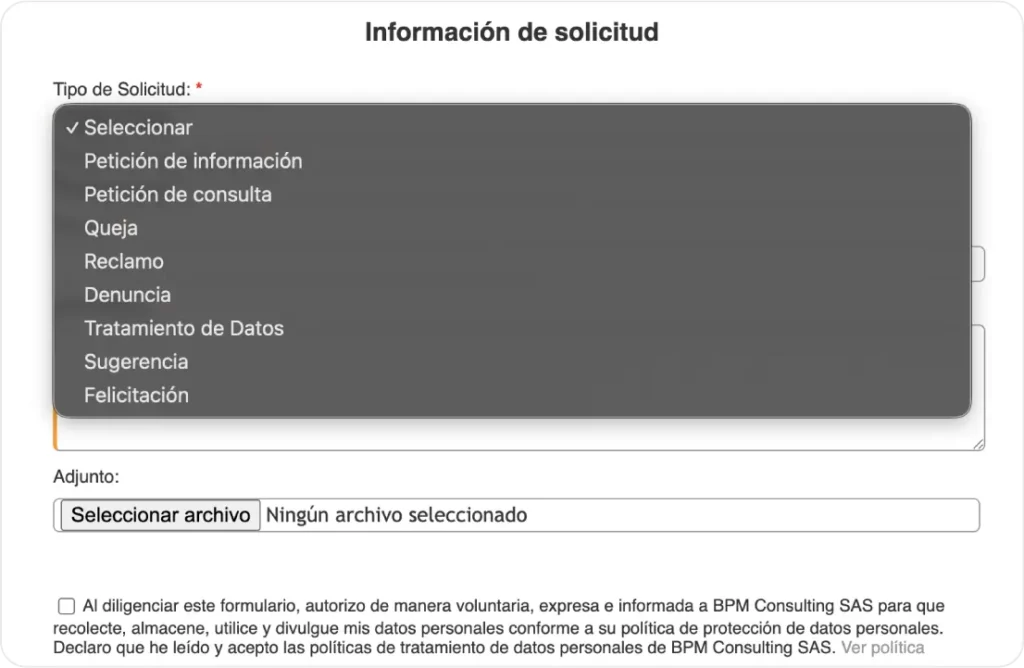
Image 2 – definición de la queja (Discriminación y/o exclusión
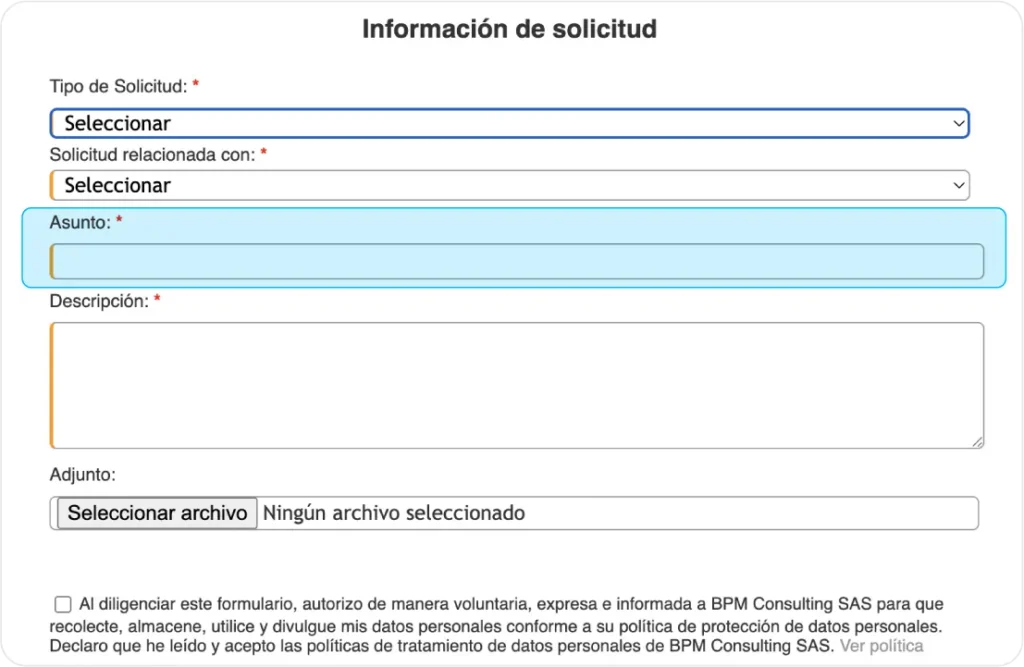
A complaint related to non-compliance with the Diversity and Inclusion Policy must include, at a minimum, the following:
- A brief description of the facts
- Evidence supporting the complaint (e.g., emails, documents, written testimonies, etc.)
Note: The identity of the reporting individual, as well as the information and evidence provided in the report, will be kept confidential in accordance with the organization’s Personal Data Protection Policy.
COMPLIANCE
Compliance with this policy is mandatory. In the event that individuals within the organization or third parties fail to adhere to this policy, the organization reserves the right to take appropriate measures.
Any person who becomes aware of any violation of this policy must report it to their direct supervisor or to the Human Talent and Culture Management Department.
TRACEABILITY | ||
VERSION | APPROVAL DATE | CHANGE CONTROL |
01 | 15-12-2022 | Original version |
02 | 01-11-2023 | Full document update |
03 | 24-01-2024 | Change in document classification: Private to Public |
04 | 31-10-2024 | Reasonable adjustments to refer to “people” instead of “employees”. Update of the Complaints Management section to better explain how to submit a complaint. Inclusion of the following chapters: Regulatory Framework, Specific Objectives, and Responsible Management Area. |
05 | 03-12-2024 | Inclusion of the Roles and Responsibilities chapter |